Graphic Design +
Digital Media with
Illustration Emphasis
Learning Outcomes
DESIGN ILLUSTRATION
Utilize basic design Illustration principles and elements to address a visual narrative or expressive problem.
RESEARCH SKILLS
Use research skills in the development of design project solutions.
DIGITAL processes
Apply digital imaging processes in design projects.
color & composition
Demonstrate a clear understanding of composition and color.
typography skills
Apply typography skills in design projects.
graphic design principles
Demonstrate a clear understanding of graphic design principles and their application.
creative concepts
Develop creative concepts and effective visual solutions.
collaboration techniques
Demonstrate effective collaboration techniques as evidenced through the completion of real-world projects with corporate partners.
course listing
Coursework designed to create a solid foundation, with unique and specialized skills.
FD118 Color + Design Theory Required
Credits: 3.0
This course investigates principles of pictorial organization through the relationship of composition and color of visual elements. This includes the study of formal qualities of art; line, shape, value, texture, rhythm, space, balance, proportion, movement, unity, harmony, and tension. Studies of color address properties of hue, value, and intensity, as well as color interactions of harmony, discord, and simultaneous contrast. Special emphasis is given to concepts necessary for visual communication, regardless of media, but this course will utilize digital tools as a way to explore the concepts efficiently and to prepare students for contemporary expectations of commercial art and design professions. Primary software: Adobe Illustrator and Adobe Photoshop.
FD127 Digital Imaging - Photoshop Required
Credits: 3.0
This lecture and studio course introduces principles of creative visualization with the use of the computer and pixel based imaging software. Comprehension of key terms and concepts are taught, with projects designed to develop practical software skills and aesthetic development. Emphasis is placed upon working with imagery from digital cameras, scanners, and generating original computer graphics. Topics include photo-retouching, digital drawing and painting, digital montage, color modes, and preparing files for printing and web based display. Primary software: Adobe Photoshop.
FD145 Design Drawing - Form, Function, Surface Required
Credits: 3.0
This foundation level drawing course is for graphic design students to gain competency in traditional basic of drawing, including line, shape, tone, and space. Drawing from observation to depict form with accurate proportion and perspective is practiced, as well as creating diagrams to visually communicate in ways that are not directly observable.
FD129 Digital Imaging - Illustrator Required
Credits: 3.0
This lecture and studio course is focused on the use vector based imaging software for drawing and design. Comprehension of key terms and concepts are taught, with projects designed to develop practical software skills and aesthetic development. Emphasis is placed upon use of vector drawing tools, stylization techniques, and integration with pixel graphics. Topics include simplification of form, technical drawing, pattern creation, and perspective studies. Primary software: Adobe Illustrator.
FD137 3D Design 1 - Principles Required
Credits: 3.0
This course will focus on an introduction to 3D. Students will learn the key features of modeling, animation, lighting, texturing, physic dynamics and camera technique through Autodesk Maya.
FD173 Graphic Design 1- Visual Exploration Required
Credits: 3.0
This foundation course explores basic graphic design methods, processes, techniques, and formats. Assignments introduce elements, media, and principles of graphic design from historical and contemporary perspectives and emphasize visual representation aimed to communicate ideas and non-visual content. Students will use Adobe’s Creative Suite 3 (CS3) software.
GD203 Typography 1 - Exploration Required
Credits: 3.0
This course covers the history, theory and practice of letterforms and typography they apply to other areas of design, graphics and visual communication. Projects cover principles of typography, letter structure, typeface selection, fundamentals of digital type, and typographic layout.
GD239 Visual Design + Illustration Required
Credits: 3.0
This studio course in digital image making will challenge students to create thought-provoking and visually stimulating work while learning how to use the computer as a versatile tool for creation and manipulation. A range of projects will be developed while students consider the role of literal and implicit communication, aesthetics, and emotional impact. Computer applications: Adobe Photoshop, Adobe Illustrator, and Macromedia Flash (a beginning intro).
GD251 3D Design 2 - Techniques Required
Credits: 3.0
This advanced course introduces 3-dimensional computer modeling, concepts, technology and techniques (i.e., 3-dimensional virtual coordinate system, wire-frame, texture mapping, light source and camera positioning, etc.) through assignments that emphasize innovative object or product design and photorealistic representation.
GD253 Typography 2 - Structure Required
Credits: 3.0
This is an introductory course for the design major requiring conceptual, perceptual, manual, and computational skills to meet studio research into the history of letterforms and layout design. Projects explore compositional and structural aspects of letterforms, as well as various kinds of text layouts and their optical and interpretational effects. Computer applications: Adobe Photoshop, Adobe Illustrator, and Adobe InDesign.
GD254 Graphic Design 2 -Concept and Innovation Required
Credits: 3.0
This is an introductory course for the design major. Studio practice explores the use of hierarchy, form, conceptual thinking, visual representation and interpretation, and the elements of communication. Projects address various essential graphic design formats: logotypes, promotional items, editorial design examples, announcements, and a variety of visual styles. Computer applications: Adobe Photoshop, Adobe Illustrator, and Adobe InDesign.
GD001 GD+DM Advancement Review Required
Credits: 0.0
LCAD Design students will be required to successfully complete a portfolio review within their sophomore to junior year in order to continue in the design program. This review is mandatory and is designed to assess strengths, weaknesses, and academic readiness to move forward in the program. Students must follow the Advancement Submission Guidelines and File Upload Instructions as provided by the Department Chair.
GD275 Digital Photography 1 Required
Credits: 3.0
This lecture and studio course examines the use of digital cameras with a focus on essential skills relevant to artist and designers. Technical aspects of the course include principles of photographic exposure, lighting, and working with digital files. Artistic aspects of the course include considerations for effective communication and emotional impact, thematic unity, and image enhancement techniques. Primary software used: Adobe Photoshop, Adobe Bridge.
GD353 Typography 3 - Systems Required
Credits: 3.0
This intermediate course explores the underlying principles and elements of letterforms. Also explored are their usage, various grid-based layout systems, and typographic styles. Assignments emphasize visual representations of complex information through various editorial design formats, and are conceived as a means by which to analyze the semiotic function of text and its aesthetic and phenomenal qualities. Computer applications: Adobe Photoshop, Adobe Illustrator, and Adobe InDesign.
GD354 Graphic Design 3 - Structure and Strategy Required
Credits: 3.0
This is an introductory course for the design major. Studio practice explores the use of hierarchy, form, conceptual thinking, visual representation and interpretation, and the elements of communication. Projects address various essential graphic design formats: logotypes, promotional items, editorial design examples, announcements, and a variety of visual styles. Computer applications: Adobe Photoshop, Adobe Illustrator, and Adobe InDesign.
GD320 Digital Videography 1 Required
Credits: 3.0
This course focusses on recording, editing, and compositing digital video files. Concepts and techniques of non-linear editing, compositing layers of computer generated imagery and live action video, special effects, camera movements and cinematic points of view, and design of titling and motion graphics will be covered. The work of professional animators, directors, and producers will be screened and discussed. This course covers the operation of video-capable devices and camcorders, including exposure control, use of lighting, and shot types. Techniques for working with title graphics and sound will also be demonstrated and practiced.
FD161 Fundamentals of Illustration Required
Credits: 3.0
An introduction to illustration and the myriad contemporary practices relevant to the role. Through assignments, in-class demonstrations, lectures, and brief exercises, students will explore the practices and principles of communicating visual concepts and executing successful illustrations. Projects mirror industry relevant assignments and emphasis is placed on beginning to lay the foundation for a unique voice and vision as it relates to individual student portfolios.
GD202 User Interface Design 1 Required
Credits: 3.0
This course covers user interface and user experience principles, processes, and application. Students will learn the basic skills of UI/UX in order to design digital products such as mobile apps and responsive websites. The goal of the class is to understand and apply the product development steps; starting with research, concept validation, user-focused designs, to file preparation for web developers/engineers. The course will introduce industry-approved tools and programs.
GD319 Brand Design Strategy 1 Required
Credits: 3.0
This advanced course requires creative, computational, manual and critical thinking skills to meet conceptual and/or visual standards relevant to a comprehensive and strategic brand identity system. This course includes a comparative analysis of the market and of strategic brand positioning to create a visual identity system (for example, creation of a brand-mark, color palettes, brand expression, brand style through typographic, photographic and illustration styles). Brand strategy solutions will include sample applications (examples include environmental graphic design, transportation, apparel, product, packaging, experiential design).
FD142 Motion Design 1 - Principles Required
Credits: 3.0
This course is an introduction to the process of creating motion graphics. The core applications used in this course are Adobe After Effects, Premiere, Photoshop, and Illustrator. Students will also be creating video content to use in their motion graphics work.
GD409 Graphic Design 4 - Visual Systems Required
Credits: 3.0
This is an advanced level course in the design major that focuses on the methods and principles of communication and the creation of meaningful content through the development of visual symbols, structures, and systems. The course will include extensive design processes, readings and in-depth research, the development and execution of strategic briefs, and both visual and verbal presentations.
IL236 Voice + Vision Required
Credits: 3.0
A sophomore level course that encourages students to look inward and build toward a professional voice and portfolio as it relates to their future focus as a creative professional. Digital tools and digital media exploration are emphasized as students generate work in response to industry based prompts. Basic motion and animation techniques are covered and continued in IL 336 Sequential Problem Solving. Illustration Voice + Vision will also serve as an introduction and overview to core business practices in Illustration.
GD314 Packaging Design 1 - Form and Function Required
Credits: 3.0
This advanced course requires conceptual, imaginative, manual, and computational skills to meet studio production and research resulting in projects that combine visual identity elements (such as logotypes, color palettes, typographic components, illustrations, and/or photographs). The course emphasizes a contextual approach to developing a brand or a line of products and its package as well as toward understanding the design processes that result in functional three-dimensional package solutions. Computer applications: Adobe Photoshop, Adobe Illustrator, and Adobe InDesign.
GD418 Senior Thesis 1- Concept Development Required
Credits: 3.0
This course prepares students to enter the professional design industry. Students will create a database of prospective employers in a variety of design-related fields for a self-promotional direct-mail campaign. In accordance with the observed individual needs, students will complete a grand-scale senior thesis project. The emphasis of the senior thesis is for the student to challenge their design and problem-solving skills while developing final portfolio pieces.
IL336 Sequential Problem Solving Required
Credits: 3.0
This junior level course guides students in the creation of narrative works in sequence as a means of producing illustrations that interact with a myriad of industry markets. Furthermore, this course will continue and build upon the motion based prompts introduced in IL 236: Voice + Vision.
GD419 Senior Thesis 2 - Concept Execution Required
Credits: 3.0
This course continues to prepare students to enter the professional design industry. Students will create a database of prospective employers in a variety of design-related fields for a self-promotional direct-mail campaign. In accordance with the observed individual needs, students will complete a grand-scale senior thesis project. The emphasis of the senior thesis is for the student to challenge their design and problem-solving skills while developing final portfolio pieces.
FD151 Figure Drawing Elective
Credits: 3.0
This course is an introduction to drawing the human form that explores observational and imaginative drawing techniques using graphite and charcoal. Students work from the draped and undraped model. Emphasis is on accurate representation of the figure utilizing observation with the elements of gesture, measurement, construction line, volume, proportion, and surface anatomy. Materials include graphite and charcoal.
GD232 Action Sport Video 1 Elective
Credits: 3.0
This course is designed to expose students to the basics of video production for the purpose of concept and content creation. Students study techniques and methods for reporting, messaging, and storytelling through video. The interactive course teaches students how to develop stories and how to best structure these stories for Action Sport audiences.
GD234 Action Sport Business, Brand + Culture Elective
Credits: 3.0
This course serves as an exploration and introduction of the history and culture of action sports. The course provides an overview of the key companies, influential athletes, various sports and key concepts that drive the industry culture and brand. Through the use of lectures and guest speakers, students will gain valuable context for design development and industry knowledge. Guest speakers will include corporate leaders, art directors, athletes and action sport designers.
GD235 Special Topics Elective
Credits: 3.0
This course allows students to explore or participate in a class that is specifically focused on a special topic or opportunity. Example: Prints and Patterns – using design skills to understand the development and set up for apparel print and pattern making.
GD236 User Interface Design 2 Elective
Credits: 3.0
This course covers user interface and user experience principles, processes, and application. Students will learn the basic skills of UI/UX in order to design digital products such as mobile apps and responsive websites. The goal of the class is to understand and apply the product development steps; starting with research, concept validation, user-focused designs, to file preparation for web developers/engineers. The course will introduce industry-approved tools and programs.
GD237 Digital Media Strategies Elective
Credits: 3.0
This course is designed to empower graphic designers with the knowledge and skills needed to create compelling visual content for a wide range of digital platforms. Through a combination of theory, practical exercises, and real-world case studies, students will gain an understanding of how to engage, inform, and inspire audiences across various online platforms including social media, websites, mobile apps, and emerging technologies. Topics include social media literacy, best practices for digital file distribution, domain name registration, web hosting, and a survey of dominant platforms and technologies that allow for instant, global communication. Software used: Adobe Photoshop, Adobe Illustrator, text-editors, and supplemental open source and third party tools for design and content management.
GD302 Color, Materials + Finishes Elective
Credits: 3.0
Color Marketing, and the field of Color, Material and Finish design is one of the fastest growing areas of design that is practiced in numerous different industries including apparel, automotive, consumer electronics, aviation, and almost all consumer goods manufactured worldwide. This discipline is used to create more meaning, emotional connection, and aesthetic value to products of all kind. Most professionals who work in the field come from a variety of backgrounds including graphics, branding, illustration, advertising, industrial and product design. The top global brands like Apple, NIKE, MINI, Beats, use color, materials, and finishes to create products that will succeed in the marketplace, and create more added value, and emotional connection to the products. It is one of the main factors in creating the DNA of any successful consumer product brand.
GD303 Experiential Design Elective
Credits: 3.0
In this course, we will learn how to design and implement various types of mobile AR experiences (model viewers, interactive objects, image targets, and face filters) using Unity. You’ll learn about the challenges and tactics for creating well designed AR experiences, and build a solid foundation that you can use to create a wide variety of functional, high quality, AR experiences on your phone.
GD304 Motion for UI/UX 1 Elective
Credits: 3.0
Awaiting course description
GD305 Product Design 1 Elective
Credits: 3.0
This intermediate course requires conceptual, imaginative, manual and critical thinking skills resulting in conceptual 3 dimensional Industrial Design Product solutions. Utilizing design processes and the principles and practices of Industrial Design, this course focuses on developing innovative and functional products for various industries. Through a combination of lectures, group sketch critique, and hands-on projects, students will learn the fundamental concepts and techniques used in the Product Design process from concept ideation to final product realization. Computer applications: Adobe Photoshop, Adobe Illustrator, and Adobe InDesign.
GD315 Action Sport Video 2: On Location Elective
Credits: 3.0
This course provides the opportunity for students to participate in project planning for location development projects. The course covers the art and science of non-linear production and editing. Students study field-production techniques and methods for developing, reporting, and storytelling through action video. Students learn how working on location, with various elements, impacts the final project and ultimately affect its success. Students are introduced to the production model of editing video for location shooting.
GD332 Brand Development & Marketing Elective
Credits: 3.0
Brand Development will address the cornerstone methods and philosophies of branding. Students will create brand campaigns, media, advertising and branded experiences for both hypothetical and real companies. Projects will use cross disciplinary skills.
GD333 Design Innovation Studio Elective
Credits: 3.0
This course is an upper level elective where a selected group of students focus on in depth projects. The Honors Team environment simulates that of a working design office, school project or firm. Students take the first step into professional application of their talents through working on advanced more complex or multi-faceted projects individually and as a team. Honors lab looks at the business of design as well as the effect of the designer in business. Projects can also include LCAD material etc. Admission is by portfolio application.
GD334 Visual Merchandising Elective
Credits: 3.0
This course addresses the skills and logic needed to conceptualize and extend a brand to environmental applications. Bus wraps, events, retail spaces, billboards, buildings and exhibits are all mediums that have become the domain of the designer. This course focuses on projects that will teach the student how to design for these environments.
GD350 Digital Videography 2 - Motion & Movies Elective
Credits: 3.0
This course will allow the student to gain a more in-depth focus on creating and developing the skills needed to create more advanced digital videos (30 second ads marketing/promotional videos, and digital shorts, etc.). Students will learn and use Final Cut Pro, HD camera use, lighting techniques as needed. Students will learn the process needed to conceptualize and create final videos. Some use of special effects will be explored as well as the software used to create these effects.
GD351 Action Sport Industry 1 Elective
Credits: 3.0
This course introduces the concepts, methods and skills used in the Action Sports industry.
GD375 Digital Photography 2 Elective
Credits: 3.0
This lecture and studio course explores the use of digital cameras with a focus on essential skills relevant to artist and designers. Technical aspects of the course include principles of photographic exposure, lighting, and working with digital files. Artistic aspects of the course include considerations for effective communication and emotional impact, thematic unity, and image enhancement techniques. Primary software used: Adobe Photoshop, Adobe Bridge.
GD402 3D Design for Motion 2 Elective
Credits: 3.0
This is an advanced course that explores, through assignments that emphasize narrative and stylistic qualities of dynamic, time-based presentations, computer modeling and concepts and techniques. Computer application: Maya.
GD407 Adv Tpx: Colors, Materials + Finishes Elective
Credits: 3.0
This is an advanced course that emphasizes an innovative contextual approach to the design and development of a product, environment or experience applying the strategies and skills relevant to the field of Colors, Materials and Finishes. A combination of critical thinking, design strategies, material resourcing and rendering skills result in the development of conceptual design solutions and prototypes for products, environments and experiences. The class requires an advanced understanding of conceptual, imaginative, manual, and computational skills to meet studio production and research resulting in projects that combine visual identity elements (such as logotypes, color palettes, typographic components, illustrations, and/or photographs in both vector and 3D rendered applications). Computer applications: Adobe Photoshop, Adobe Illustrator, Cinema 4D, Frame IO, Swatchbook.
GD411 Motion Design 2 - Techniques Elective
Credits: 3.0
This course builds on students existing design and typography skills and sets them in motion. Students in this course learn how to communicate messages by combining video, 3d, animation, and sound. This course focuses on Adobe master suite, After Effects, Maya, Sound Booth, and FinalCut Pro. Students will be storyboarding and executing motion graphics pieces that would be used in high definition television and on the web. Topics include typographic design, alpha channels, keys, masks, compositing 2D and 3D graphics, and video compression.
GD420 Digital Videography 2 Elective
Credits: 3.0
This course is for students that have completed Digital Video 1 and want to continue advancing their skills. This class builds upon the knowledge and experience gained from previous projects and allows for more concept development, refined camera work, and with personalized topics related to storytelling, informing an audience, or creating persuasive presentations.
GD421 Motion Graphics 3 - Methods Elective
Credits: 3.0
This course builds the on students existing experience and knowledge from Motion Graphics + Visual Effects. Students in this course focus on producing a motion graphics reel to display their work. Students function independently to create several professional level motion graphic animations to supplement the work they have already produced. This course offers more creative freedom so students can explore their own style inside of motion graphics. At the end of the course students will have a reel that will showcase their abilities. This course focuses on Adobe Creative Cloud, After Effects, C4D, Audition, Premiere and Media Encoder.
GD451 Action Sport Industry 2 Elective
Credits: 3.0
This course provides the next level of development for the student looking to enter the action sport industry. This class partners with industry to create a more in depth knowledge of the business, terminology, methods and creativity needed. Students will use their knowledge of media, layout and 3D to create complete individual clothing lines or action sport related product.
GD452 Prints + Patterns Elective
Credits: 3.0
This course teaches students how to make production ready prints and patterns for apparel or other uses.
GD496 Adv Tpx User Interface Design Elective
Credits: 3.0
This advanced course covers advanced user interface and user experience principles, processes, and application. Students will learn advanced skills of UI/UX building on the basic skills established in UI/UX 1 and 2 in order to design digital products such as mobile apps and responsive websites. The goal of the class is to understand and apply at an advanced level the product development steps; starting with research, concept validation, user-focused designs, to file preparation for web developers/engineers. The course will build on the industry-approved tools and programs.
GD415 Package Design 2 Elective
Credits: 3.0
This course continues studies in product and package design and in the development of a brand or a line of products and its packaging. The class focuses on the interpretational, promotional, and functional aspects of three- dimensional package solutions. Computer applications: Adobe Photoshop, Adobe Illustrator, and Adobe InDesign.
GD416 Experiential Design 2 Elective
Credits: 3.0
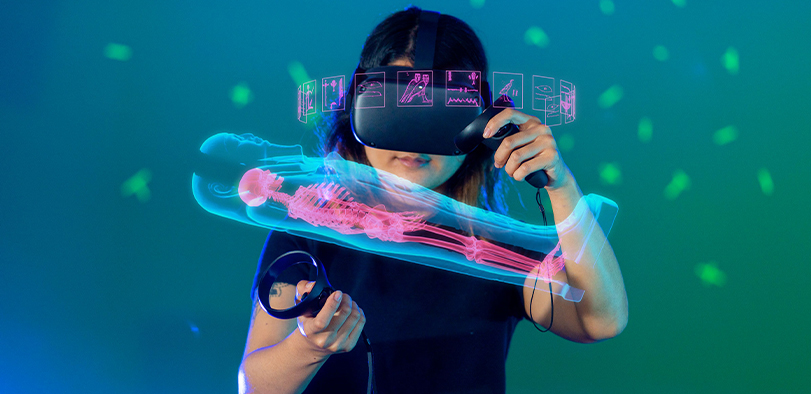
This is an advanced course in the Graphic Design major. Technical skills and Design strategies acquired in Experiential Design 1 are applied to conceptual, dynamic, complex solutions in the creation of immersive experiences using 3D modeling, augmented reality (AR), and virtual reality (VR). Assignments are based on design strategies and advanced principles appropriate to building dynamic interactive environments using storytelling, spatial interaction, and emerging technology. Open to all majors with intermediate level skills in 3D, Motion and Design.
GD490 Advanced Studies: Typography Elective
Credits: 3.0
This is an advanced course that allows students to focus on type and information design. Students will work closely with the course instructor and will hone individual design skills.
GD491 Advanced Studies – Graphic Design Elective
Credits: 3.0
This is an advanced course that allows students to focus on developing individual design projects. Students will work closely with the course instructor on the development of communication materials.
GD493 Advanced Studies – Package Design Elective
Credits: 3.0
This is an advanced course that emphasizes an advanced contextual approach to developing a brand or a line of products and its package as well as toward understanding the design processes that result in the development of functional three-dimensional package solutions. The course requires an advanced understanding of conceptual, imaginative, manual, and computational skills to meet studio production and research resulting in projects that combine visual identity elements (such as logotypes, color palettes, typographic components, illustrations, and/or photographs). Computer applications: Adobe Photoshop, Adobe Illustrator, and Adobe InDesign.
MD210 Collage Elective
Credits: 3.0
This course investigates the history, practice, and visual language of collage. Utilizing varied sources to gather images and found objects, students will investigate and research interpersonal connections to images and objects they feel connected too. This course is structured around three main projects that seek to expand the creative, technical, and conceptual possibilities, all while aspiring to push the boundaries within the media of collage.
MD342 Ideation Lab: Pitch in Practice Elective
Credits: 3.0
A junior level course that challenges students to amplify their unique identity and artistic vision as it relates to their portfolio. The process and skill for professionally pitching and selling self – generated illustration projects is covered. Students will edit and refine individually crafted creative works in a group setting from ideation and brainstorming to final art. Furthermore, Illustration Ideation Lab: Pitch in Practice will activate students to explore methods and techniques related to their practice that enhance and refine their professional portfolios.