
Dennis + Leslie
Power Library
Visit The Library
On Main Campus
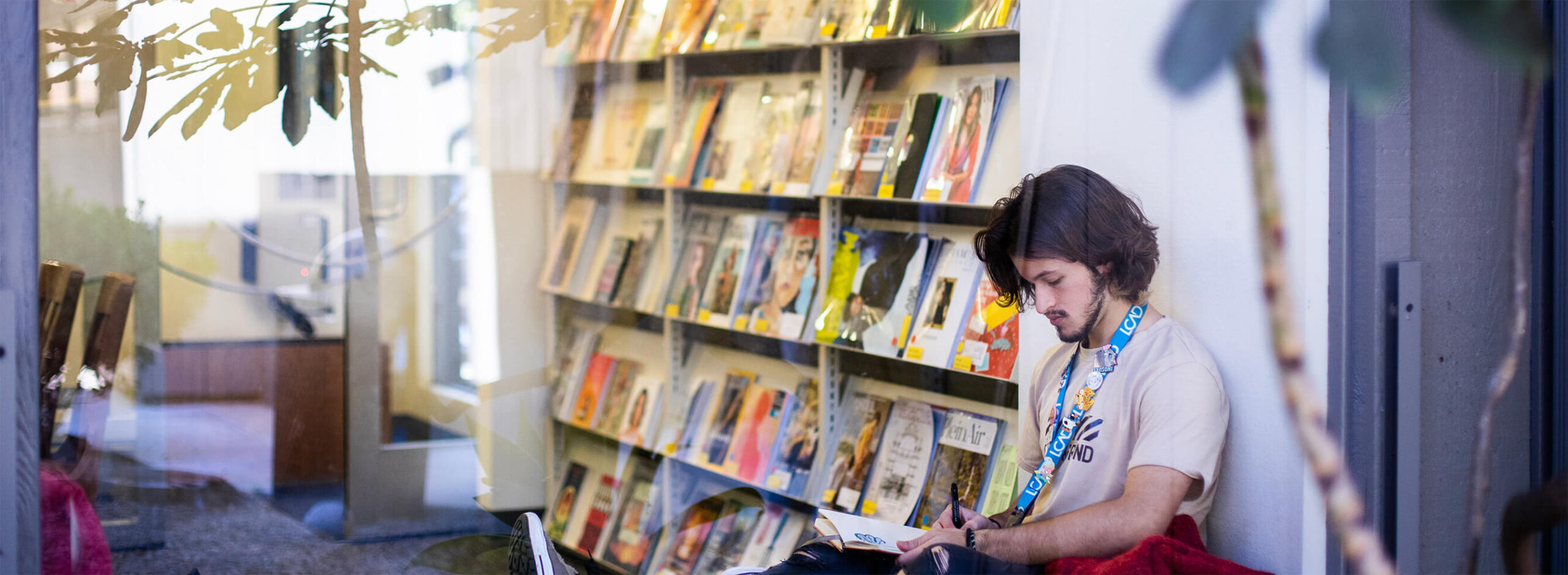
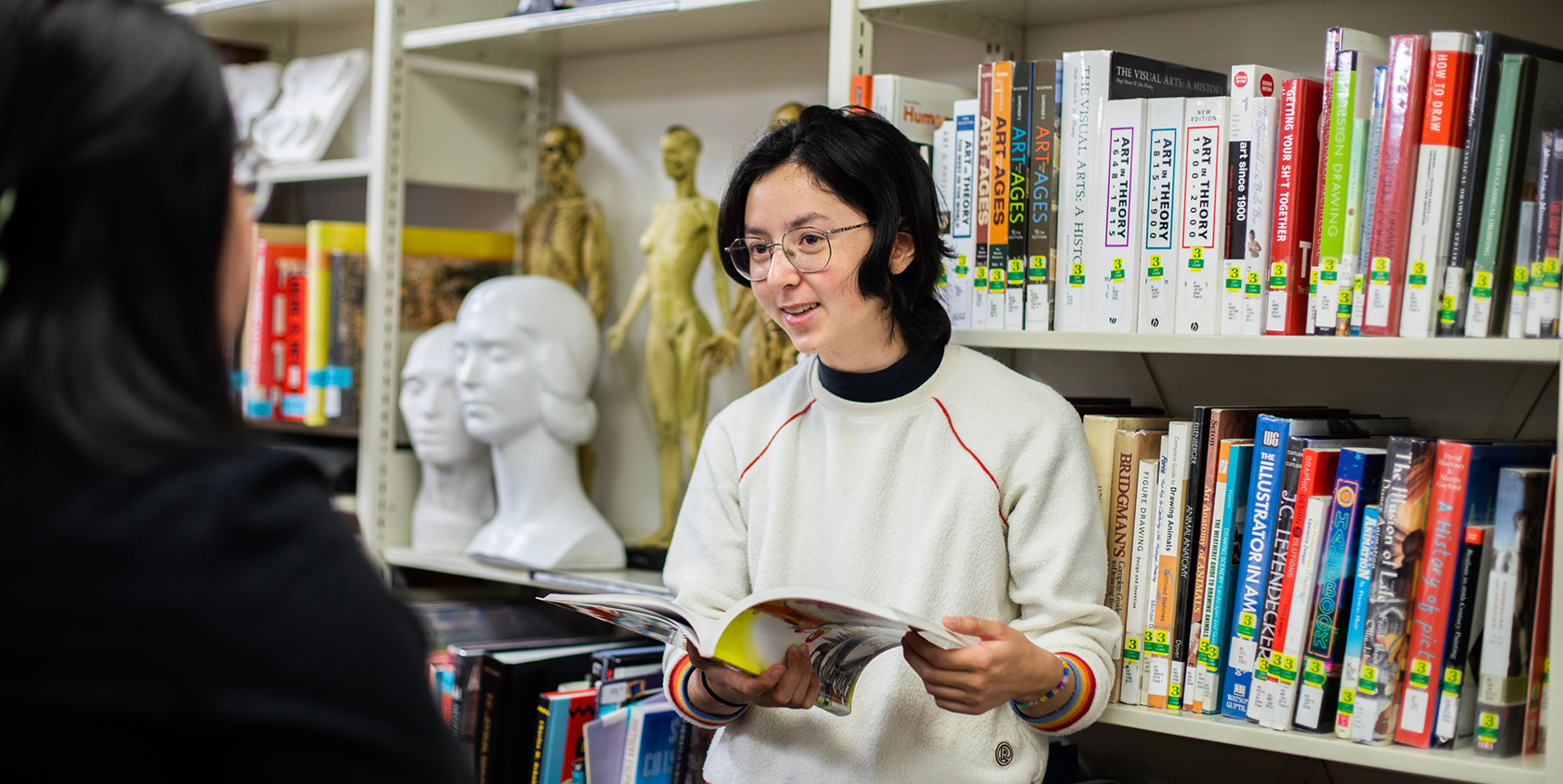
The Dennis and Leslie Power Library at LCAD’s scenic Main Campus supports LCAD’s educational mission. The library offers access to a rich collection of over 20,000 volumes with a concentration in the fine arts, art history, graphic novels, zines, and film art as well as a strong collection of digital resources to support all majors. Between its welcoming study spaces, hands-on learning environments, and collaborative faculty partnerships, the Power Library invites students to discover, inquire, and create in a supportive academic home.
HOURS: M-TH, 9:30-8 pm, Sat & Sun Closed
CIRCULATION DESK: 949-367-6000 ext. 225
CHECKOUT: libcheckout@lcad.edu
Visit Big Bend
AT Big Bend
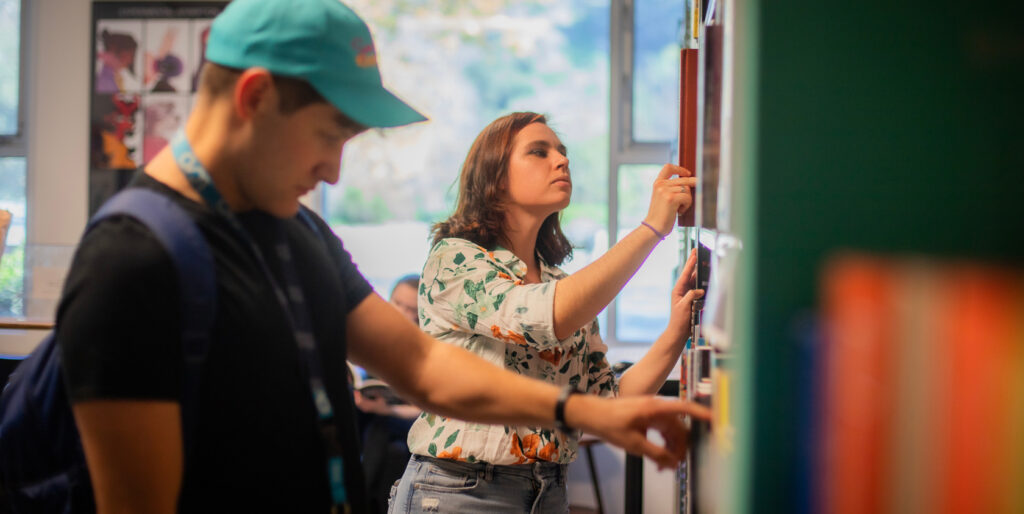
The Big Bend Library, located on LCAD’s Big Bend Campus, provides students and faculty with convenient access to core library services in support of the college’s art and design programs. This branch library offers a curated selection of books, journals, and digital resources tailored to support the Graphic Design, Animation, and Game Design majors. The Big Bend Library extends research support, access to specialized databases, and guidance in using library tools, ensuring that students at the Big Bend campus have the same strong foundation for academic and artistic success.
Learning Outcomes
Trustworthy sources
Students will identify markers of authority corresponding with the type of information needed in order to choose trustworthy sources.
(e.g., a student working on an art history paper will weigh the authority of popular versus peer-reviewed literature on a subject)
Creation as a process
Students will distinguish different types of sources created in different timelines and contexts in order to match their information need (e.g., a student researching costume design may choose a book to contextualize a design in a social and historical context as well as a website to gain information on its use in current creative products)
value of information
Students will demonstrate responsibility in intellectual property in order to act within the expected legal and ethical frameworks of their disciplines (e.g., through citations in written papers as well as adherence to U.S. Copyright law for online displays)
Research As Inquiry
Students will formulate increasingly complex research questions in order to explore research as an open-ended investigation (e.g., A student working on their master’s thesis can discuss the evolution of their thesis topic based on the information uncovered during research)
scholarship as conversation
Students will summarize the changes in scholarly perspective over time on a particular topic within a specific discipline in order to recognize the ongoing scholarly conversation (e.g., fine art students will contextualize a work as it was understood during its original unveiling versus its place in current contexts).
searching as strategic exploration
Students will effectively use different types of searching language (e.g., controlled vocabulary, keywords, natural language, subject terms) and refine searches based on their discoveries in order to increase their results in both quality and quantity.
Promoting Open Access
Dennis and Leslie Power Library Open Access Policy
The Dennis and Leslie Power Library is committed to promoting open access to the scholarly and creative works of LCAD’s students, faculty, and staff through its institutional repository that can be found here: https://collections.lcad.edu/
This repository provides free and unrestricted online access to a diverse range of academic and artistic output, including theses, publications, exhibitions, and creative projects. By making these materials openly available, the library supports wider dissemination, increased visibility, and long-term preservation of LCAD’s intellectual and creative contributions.
All materials deposited in the repository are subject to appropriate copyright and licensing considerations. Contributors are encouraged to use open licenses, such as Creative Commons, to facilitate lawful sharing and reuse while protecting their rights.
The Dennis and Leslie Power Library maintains metadata standards and adheres to best practices to ensure that repository content is easily discoverable and accessible to the global scholarly community.
For questions about depositing work or the library’s open access commitment, please contact Rand Boyd at rboyd@lcad.edu.