


The Project
In our latest alumni spotlight, we sit down with Olivia Nicoll, a recent graduate of LCAD’s Graphic Design + Digital Media program, who is currently making waves as a designer at Elevate. Olivia is playing a pivotal role in the $1.1 billion renovation of the Honda Center in Anaheim, contributing to everything from interior design and environmental branding to immersive fan experiences. From her journey as an intern at Elevate during her time as an LCAD student to her current role shaping high-profile projects, Olivia’s story is a testament to the power of hands-on learning and creative innovation fostered at LCAD.
$1.1B
project
Olivia, you’ve been involved in one of the most exciting and impactful renovations in the area—the $1.1B Honda Center project. Could you tell us more about your role at Elevate and how it connects to this major renovation?
I’ve been a Designer on the Honda Center renovation since the very beginning—working from concept through to completion. This project has been incredibly immersive, and I’ve had the opportunity to shape nearly every aspect of the arena, including concourse levels, premium lounges, and food and beverage destinations. My role spans interior design, environmental branding, graphic design, and experiential design, which has enabled me to build cohesive and elevated fan experience across the entire venue.
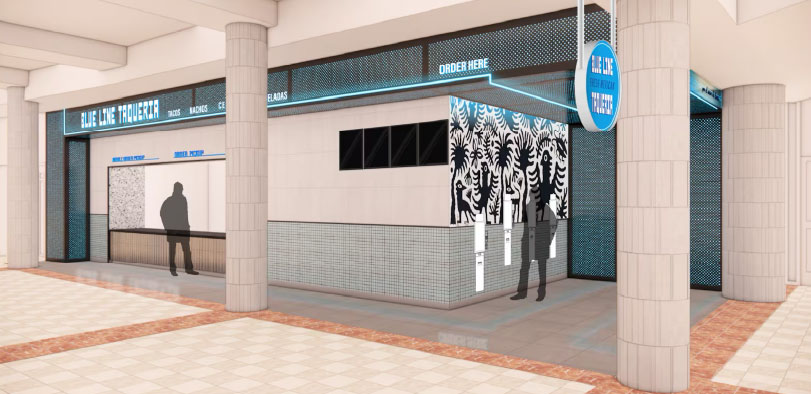
As a recent graduate of LCAD’s Graphic Design + Digital Media program, how did your academic experiences and skills directly contribute to the work you’re doing on such a large-scale, high-profile project?
Going into a project of this scale, having a strong foundation in design and fluency in digital tools was essential. The Graphic Design + Digital Media program at LCAD gave me that solid grounding, and I felt more than prepared to step into the work I’m doing at Elevate. From creative thinking to technical skills, my education truly equipped me to thrive in a fast-paced, high-level design environment.

The Honda Center renovation is not just about updating a building—it’s about creating a modern, fan-focused experience. What aspects of the design and modernization are you most excited about, and how does your work fit into that vision?
It’s hard to choose just one part. There’s so much to be excited about! This renovation is entirely fan-centered, which is what makes it so special. From improved flow and intuitive wayfinding to immersive branding moments and elevated lounges, every detail has been thoughtfully designed. Personally, I can’t wait to experience the arena as a fan again. Watching a Ducks game and seeing the transformation from that perspective will be surreal.

You started your journey with Elevate as an intern while still pursuing your degree at LCAD. How did your internship experience shape your transition from a student to a full-time professional, and what advice do you have for students at LCAD who aspire to follow a similar path?
Interning while in school was one of the most important aspects of my education. It gave me real-world industry experience, taught me how to work with clients and coworkers, and ultimately set me up for success as a full-time designer. I completed four internships during my time at LCAD, and each one helped me build confidence and industry knowledge. My advice to students would be: take advantage of every opportunity to intern—you learn things in those environments that the classroom can’t replicate.
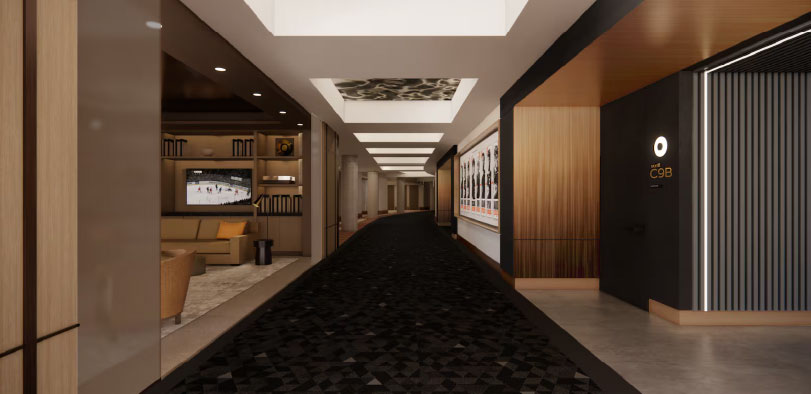
In working on a project of this scale, you’re likely collaborating with industry experts and design professionals. How has your time at LCAD, particularly in the Graphic Design + Digital Media program, prepared you for these collaborations?
LCAD’s emphasis on collaboration, critique, and creative problem-solving really mirrors the way professional design teams work. We learned how to communicate ideas clearly, accept and apply feedback, and balance creativity with strategic thinking. Those are the same skills I now use daily when working alongside architects, engineers, and other creatives at Elevate.

The Honda Center renovation includes cutting-edge designs like automated beer pouring systems and a new exterior LED screen. How do you see emerging technologies and trends shaping the future of design and fan experience in spaces like these?
Emerging technologies are helping us design better fan experiences by making spaces more interactive, efficient, and connected. At the Honda Center, features like automated beer systems and digital displays enhance the guest experience while also giving us valuable data such as how people move through the space or what services they use most. This information helps us make smarter design decisions and improve how fans experience the venue over time. Technology isn’t just about adding something new and fancy; it’s about learning from how people use a space so we can keep making it better.

Finally, what do you think sets LCAD’s Graphic Design + Digital Media program apart, and how do you see the college’s emphasis on problem-solving, critical thinking, and creative innovation benefiting the next generation of designers entering the industry?
What really sets LCAD apart is the ability to shape your own creative path within the program. I was passionate about interior, experiential, and environmental design, and even though I was studying graphic design, I had the freedom to tailor my projects toward those interests. That flexibility allowed me to develop a unique portfolio and ultimately move into the role I have now. I feel incredibly lucky to have found the career I love.